How we cee it. – December 2024 Digest
This is the monthly recap.The real action happens weekly — subscribe to How we cee it. Week 49 Intel Promised Multi-Billion EU Investments. Now It’s Falling Apart Intel’s…
Intel Promised Multi-Billion EU Investments. Now It’s Falling Apart
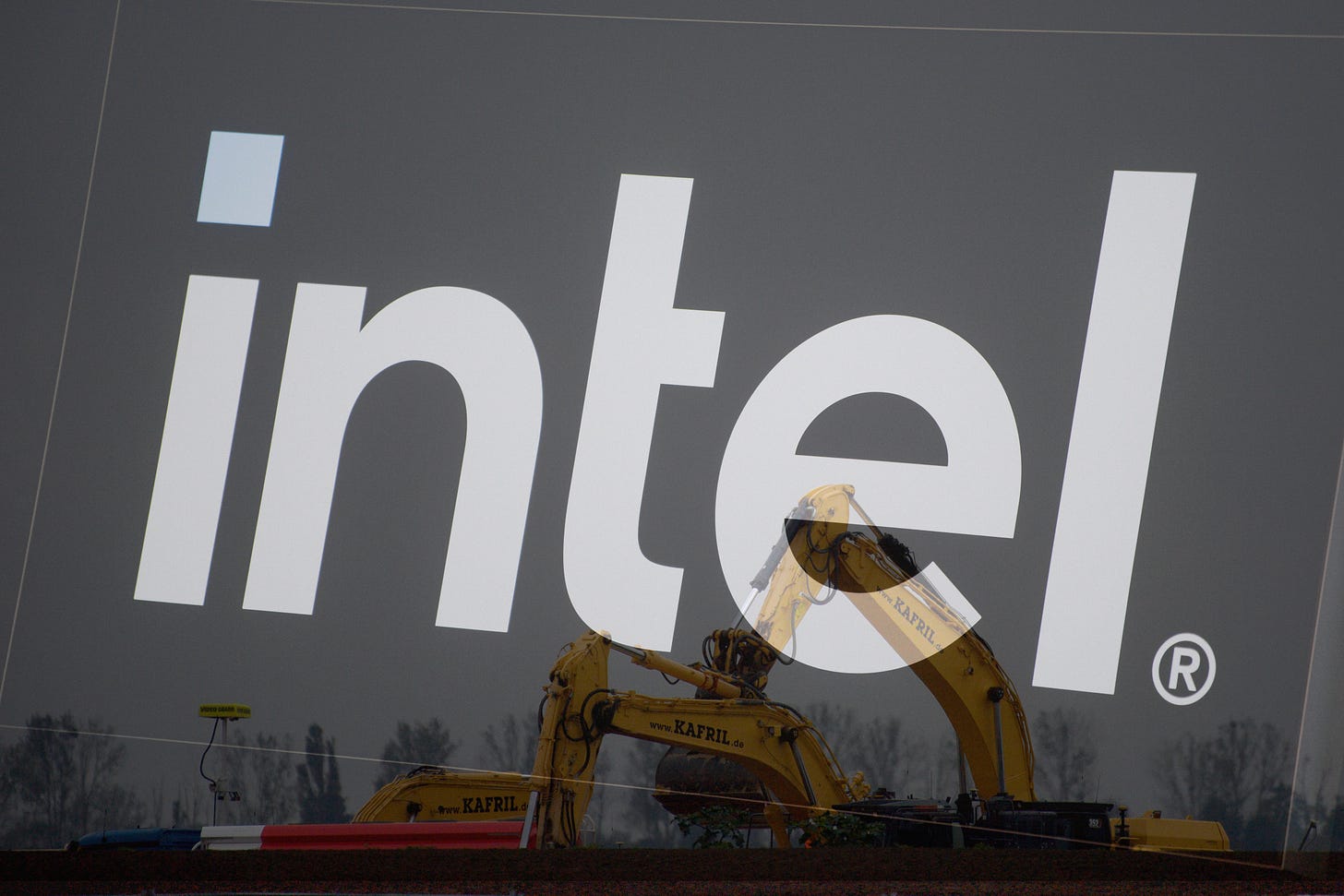
Intel’s fabs in Poland and Germany were meant to bring a tech renaissance to Europe. Today, those dreams lie in disarray.
Chief executive of Intel, Pat Gelsinger, retired on Monday after being forced out by board members, marking the bitter end of his four-year effort to restore the company to its former glory.
Gelsinger’s departure comes in the middle of his multiyear turnaround strategy to build a foundry business focused on manufacturing chips for other companies. This initiative, however, failed to gain traction as Intel struggled to capitalize on the AI boom—the same boom that turned Nvidia into the second most valuable company in the world.
Intel, a pillar of American industry and one of the few household names in the semiconductor sector, has been reeling from years of missteps. Among its most significant errors were passing on the opportunity to make chips for the iPhone and failing to make extreme ultraviolet (EUV) lithography technology, which is essential for producing faster microchips, work.
After a disastrous earnings call in August, which sent its stock price to an all-time low, the company’s underperformance forced it to suspend its ambitious plans to build three new factories in Europe—two in Germany and one in Poland. The approximately 35 billion euro initiative was intended to be the flagship investment of the EU Chips Act, a program aimed at bringing 20% of global semiconductor production to Europe.
Combined, the German and Polish governments were prepared to commit nearly €12 billion in subsidies to Intel. This is equivalent to the cost of the controversial Nord Stream 2 pipeline. However, with Intel’s crisis deepening and its expansion plans becoming increasingly uncertain, both countries are now left empty-handed.
Will Europe Ever Get A Trillion Dollar Startup?
Yet, the game isn’t over. Europe is making strides in robotics, quantum computing, and nuclear fusion—industries with the potential to create its first trillion-dollar company. These emerging fields, coupled with Europe’s world-class scientific expertise, hold immense promise.
To lead the next wave of innovation, Europe must embrace bold entrepreneurs, foster ambitious ideas, and resist the temptation to sell its brightest companies to global competitors. By doing so, Europe can build resilient, independent companies that drive technological progress, create wealth, and ensure long-term prosperity for its nations.
Europe’s Right Proposes Lifting 2035 Gas Car Ban To Save The Industry
The EU parliament’s largest political group, the European People’s Party (EPP), is calling for the ban on internal combustion engines to be lifted in 2035, citing the enormous pressure on the European car industry. The initiative reacts to the growing concerns about the competitiveness of the European car industry in the context of the rise of Chinese electric cars. The EPP is also calling for an early review of the 2025 law to ensure legal certainty for the sector.
On Thursday, industry ministers from seven EU countries, led by Italy and the Czech Republic, echoed the EPP’s position, by calling for an earlier review of the 2035 ban and greater allowances for renewable fuels. They also requested better incentive schemes for consumers to buy electric vehicles.
Even A CEE Populist Gets Behind Crypto Now

Andrej Babiš, Czech election poll leader, joins the crypto craze following Donald Trump and Vladimir Putin.
“Cryptocurrencies are a phenomenon I used to associate with risk and uncertainty. They seemed volatile and difficult to understand,” said Andrej Babiš at the crypto conference Emergence in Prague on Thursday. However, he says he now sees their economic potential, which he believes the Czech Republic should embrace.
Babiš credited U.S. President-elect Donald Trump for inspiring his pivot. The former prime minister, businessman, and ex-communist secret police agent, who previously called crypto “a lottery,” is now positioning himself as a proponent of the sector.
Babiš isn’t alone. On Friday, 174 members of the Czech parliament voted across party lines to pass a landmark crypto regulation aligned with the EU’s forthcoming MiCA framework. The legislation, which still needs to be approved by the Senate, will designate the Czech National Bank as the sector’s regulator, establish professional standards for service providers, and align crypto taxation with traditional assets like stocks or bonds. Notably, profits from crypto held for over three years or below 100,000 Czech crowns (€4,000) annually will remain tax-free.
Trump’s crypto enthusiasm, once unthinkable, gained momentum during his campaign, supported by investors like Peter Thiel and Marc Andreessen, who have major stakes in the crypto industry.
According to Bloomberg, Trump has also embraced crypto in more personal ways—selling NFT portraits of himself since May. Rebranded as a crypto advocate, Trump now plans to establish strategic crypto reserves and his family even launched its own crypto project, World Liberty Financial, in October.
Surprisingly, even Russian President/Dictator Vladimir Putin has backed Bitcoin as part of his strategy to undermine the U.S. dollar. Although, his money-laundering oligarchs have embraced crypto a long time ago.
A perfect storm of rising Bitcoin ETFs, lower interest rates, and Trump’s reelection has driven a surge in crypto markets. Bitcoin recently reached a record price of over $103,000 and is currently trading at over $98,700. The biggest cryptocurrency is now the 7th most valuable asset by market cap in the world.

Can Europe Step Up Its Space Game Before It’s Too Late?
Europe’s space sector is at a critical crossroads, balancing bold ambitions with tough realities. On one side, Project Bromo—a joint venture between Airbus, Thales, and Leonardo—represents an opportunity for Europe to develop its own satellite network, reducing reliance on foreign systems like SpaceX’s Starlink. With the global space economy projected to grow to $1.8 trillion by 2035, Project Bromo and other European space projects are not just about competitiveness—they are about securing Europe’s strategic independence in an increasingly interconnected world.
However, Airbus’ recent announcement of 2,000 job cuts in its defense and space division exposes the financial and structural challenges facing Europe’s aerospace giants. While companies like SpaceX surge ahead, Europe’s bureaucratic hurdles and fragmented approach could delay progress and stifle innovation.
Meanwhile, the looming specter of militarization in space adds urgency to Europe’s efforts. Russia’s Cosmos 2553, suspected of being a precursor to a nuclear anti-satellite weapon, highlights the risks of unchecked space weaponization. A nuclear detonation in low-Earth orbit wouldn’t just disrupt satellites—it could render parts of space unusable for years, jeopardizing critical global services like communication and navigation.
To lead in space, Europe must act decisively. Fast-tracking its space projects, streamlining regulations, and securing unified political and financial backing are essential. This isn’t just about building satellites—it’s about safeguarding Europe’s future in the space economy and ensuring resilience against emerging threats.

The EU Ties Partnerships With South America As U.S. Tariffs Loom
The European Union has struck a landmark trade agreement with Argentina, Brazil, Paraguay, and Uruguay—the Mercosur bloc—creating one of the largest trade zones in the world. This deal comes as part of the bloc’s efforts to prepare for potential import tariffs that Donald Trump has vowed to implement if he returns to office.
For Central and Eastern Europe, such tariffs could hit Slovakia particularly hard. With 20% of its non-EU exports heading to the U.S., the country’s key car production sector faces significant risks
Intel’s fabs in Poland and Germany were meant to bring a tech renaissance to Europe. Today, those dreams lie in disarray.
Chief executive of Intel, Pat Gelsinger, retired on Monday after being forced out by board members, marking the bitter end of his four-year effort to restore the company to its former glory.
Gelsinger’s departure comes in the middle of his multiyear turnaround strategy to build a foundry business focused on manufacturing chips for other companies. This initiative, however, failed to gain traction as Intel struggled to capitalize on the AI boom—the same boom that turned Nvidia into the second most valuable company in the world.
Intel, a pillar of American industry and one of the few household names in the semiconductor sector, has been reeling from years of missteps. Among its most significant errors were passing on the opportunity to make chips for the iPhone and failing to make extreme ultraviolet (EUV) lithography technology, which is essential for producing faster microchips, work.
After a disastrous earnings call in August, which sent its stock price to an all-time low, the company’s underperformance forced it to suspend its ambitious plans to build three new factories in Europe—two in Germany and one in Poland. The approximately 35 billion euro initiative was intended to be the flagship investment of the EU Chips Act, a program aimed at bringing 20% of global semiconductor production to Europe.
Combined, the German and Polish governments were prepared to commit nearly €12 billion in subsidies to Intel. This is equivalent to the cost of the controversial Nord Stream 2 pipeline. However, with Intel’s crisis deepening and its expansion plans becoming increasingly uncertain, both countries are now left empty-handed.
CEE Countries Depend on the German Industry. Now They See It Crumble

Germany faces weeks of political paralysis after Chancellor Olaf Scholz lost a confidence vote in the Bundestag on Tuesday, triggering snap elections in February. The political vacuum in Europe’s largest economy couldn’t come at a worse time.
Donald Trump’s return to the White House looms large, threatening to shake Germany and the broader EU. A shift in U.S. policy could jeopardize military support for Ukraine and bring tariffs that would hit German exporters hard, further straining an already fragile economy.
Once an industrial powerhouse built on cutting-edge production, Germany’s automotive industry now faces a lack of investment and fierce competition from China, which is nearing the production of nearly every other car globally.
Mounting market and structural pressures have forced Volkswagen, Germany’s largest automaker, to consider closing factories and cutting wages. These restructuring efforts have brought the company into conflict with its workforce over potential factory closures heading into the new year. While the fifth round of negotiations began on Monday, both sides remain at a deadlock, with talks possibly spilling over into 2025.
Suppliers are also feeling the pressure as cracks in Germany’s economic model begin to show.
Bosch, the world’s largest automotive supplier, has been hit by weak demand, rising competition from China, and a slow transition to electric vehicles. The company now expects to cut up to 10,000 more jobs at its German plants than previously anticipated.
Developments in Germany are being closely watched across Central and Eastern Europe, where many economies are tightly linked to its automotive industry.
The Czech Republic, for instance, is particularly exposed, with 30% of its exports bound for Germany. Car production, which accounts for 9% of the Czech GDP, is deeply tied to Germany through Škoda Auto, a key part of the Volkswagen Group.
For Slovakia—the world’s largest car producer per capita—Germany is also the most important trade partner, with over a fifth of its exports heading there. The Volkswagen plant in Bratislava, employing more than 11,000 people, is the country’s largest company.
In Romania, Germany accounts for 21% of total exports. Vehicles represent the country’s second-largest export sector and make up approximately 13% of the GDP.
Poland, too, relies heavily on Germany, which takes 28% of its exports. The automotive sector contributes 8% of Poland’s GDP and about 13.5% of export value. Volkswagen also operates a major manufacturing plant in Poznań.
The Hungarian automobile industry produces about 4% of GDP, with Audi (belonging to VW), Mercedes-Benz, and Opel belonging to German manufacturers.

Central and Eastern European Ratings Outlook Is Stable, but Geopolitical and Fiscal Challenges Loom
S&P Global has released its 2025 outlook for Central and Eastern Europe (CEE) sovereign ratings, noting that most ratings carry a “stable outlook”. Expectations of stronger GDP growth, controlled balance-of-payment risks, disinflation, monetary easing, and moderate government debt support this stability.
The ratings are important, as they influence governments’ borrowing costs.
Despite a stable outlook, the report highlights several key risks that could negatively impact them:
Weaker GDP growth among key trading partners, particularly Germany, due to trade tensions and geopolitical uncertainty.
Rising geopolitical tensions, including reduced U.S. NATO support and the ongoing Russia-Ukraine war, weigh on business confidence.
Fiscal challenges stemming from high deficits, slower growth, and rising defense costs, all of which could worsen financing conditions.
Delayed EU fund absorption and Monetary policy missteps.
Slovakia has already seen a downgrade in its rating from another agency—Moody’s—on Friday. Moody’s cited a series of reforms introduced by Robert Fico’s government since taking office last year as a key driver. Notably, extensive changes to the judiciary and media have sparked public protests and raised concerns within the European Commission.

Europe’s €10.6 Billion Bet on Space: Meet IRIS²
The EU has officially signed contracts worth €10.6 billion to develop its own satellite constellation, IRIS². Set to launch 290 satellites by 2030, the project aims to secure high-speed, resilient communications for Europe while reducing reliance on foreign networks like Starlink.
Sound familiar?
Just last week, we covered Project Bromo, Europe’s ambitious plan to rival Starlink with its own satellite networks. IRIS² builds on this same theme: a broader push for strategic autonomy. Europe is no longer content to rely on global competitors—be it in space communications or advanced tech infrastructure.
Why it matters for CEE:
For Central and Eastern Europe, IRIS² and Project Bromo could mean better digital access, stronger defense capabilities, and a chance to drive innovation in the region. It also signals Europe’s growing commitment to staying competitive in the global tech and space race.
These projects are not isolated—they’re pieces of the same puzzle: Europe ensuring it’s ready to stand tall in a rapidly changing, tech-driven world.
Fico Wanted to Talk About Gas. Then Why Didn’t He Go to Kyiv?

Slovak Prime Minister Robert Fico sparked controversy on Sunday by flying to Moscow to visit Russian President Vladimir Putin, who is wanted for war crimes by the International Criminal Court.
Fico became only the third Western leader to meet Putin since Russia’s full-scale invasion of Ukraine three years ago—a move that breaks from the EU’s Common Security and Defence Policy.
The Slovak PM claimed the talks focused on maintaining Russian gas flows through Ukraine, but with Kyiv refusing to extend its transit deal with Gazprom, it would have made more sense for Fico to negotiate directly with Ukraine.
Ukrainian President Volodymyr Zelenskyy condemned the meeting, writing on X, “We are losing people as a result of the war that Putin started, and such assistance to Putin is immoral.”
This isn’t Fico’s first clash with Ukraine over gas transit. At a recent Brussels summit, he accused Ukraine of dragging Slovakia into a “gas crisis.”
Yet, Slovakia’s Economy Minister Denisa Saková has assured that the country’s gas reserves are sufficient for the next year, a claim backed by SPP, Slovakia’s largest gas supplier.
Moreover, Slovakia’s strong gas interconnections with neighboring countries allow it to bypass Ukraine if necessary.
A growing diplomatic rift between Slovakia and Ukraine is more about profiting from cheap energy than anything else though, a senior Ukrainian official told Politico.
And he is probably right. Slovakia used to earn as much as €200 million annually from gas transit fees, collected as dividends by the state from Eustream, the company operating the gas pipelines.
However, Eustream, which is 51% owned by the Slovak government and 49% by EPH, a company controlled by Czech oligarchs Daniel Křetínský and Patrik Tkáč—closely tied to Fico—posted its first loss last year. The downturn is attributed to declining volumes of Russian gas flowing to Europe.
This is not the first time Fico has courted Moscow over energy matters. He made similar overtures to Putin and Gazprom in 2016. The meetings with Gazprom executives and Putin were as much about Slovakia’s national energy interests as they were about preserving profits for Eustream and its key shareholder, EPH.
At the time, the Nord Stream 2 pipeline was under development, threatening to bypass Ukraine and Slovakia entirely, which could have cost Eustream hundreds of millions of euros in lost revenue.
On one such trip, Fico reportedly traveled with Daniel Křetínský himself, underscoring the close ties between the Slovak government and the private interests benefiting from the country’s gas transit system.

Greenfield Investments Plummet Across the CEE
New greenfield investments across Central and Eastern Europe have slowed dramatically, according to a new report by the Vienna Institute for International Economic Studies.
Greenfield investment refers to when a company builds new facilities and operations entirely from scratch.
While most countries are seeing significant declines, Bulgaria, Poland, and Estonia have been hit hardest, with commitments slashed by half.
Some nations, such as Moldova, stand out as exceptions with increases in investment, but the overall picture remains challenging:
Global economic uncertainty is making investors more cautious.
Rising costs and competition from other regions are redirecting projects elsewhere.
Political and regulatory instability in certain countries is adding to the perceived risk.
Even Albania, which has recently enjoyed a tourism boom, has experienced an 88% drop in new greenfield projects.
For Central and Eastern Europe, the slowdown raises pressing concerns about the region’s ability to attract and sustain critical investment. Without decisive policy interventions to address these challenges, the decline could have long-term consequences for the region’s economic vitality.
European Stocks Struggle as U.S. Big Tech Dominates
While U.S. stocks thrive in 2024, fueled by the “Magnificent Seven” tech giants, Europe’s largest companies are struggling, Bloomberg reports. Six major names, including Novo Nordisk, Nestlé, and LVMH, are down this year. Novo Nordisk, Europe’s most valuable company, saw its market value plunge by 27% ($120 billion) in Friday’s selloff, wiping out its earlier gains.
The pharmaceutical giant Novo drove half of Denmark’s economic growth last year, helping the country avoid recession. Yet, its sharp drop underscores broader struggles for Europe’s corporate giants, with the Stoxx Europe 600 index on track for its worst annual performance relative to the American S&P 500 in nearly 25 years.
This divergence reflects structural differences. U.S. Big Tech has added $5 trillion in market value this year, reaching $16 trillion in total, while Europe’s elite group of companies nicknamed GRANOLAS lags far behind at $2.5 trillion. Moreover, only two of Europe’s top 11 firms are tech-focused, highlighting the region’s reliance on traditional industries over high-growth tech.

Christmas Special: Snail Farming Crawls Out of Its Shell in Czechia
Once a Christmas delicacy during the first Czechoslovak Republic (1918–1938), snails fell out of favor under the communist regime, deemed a symbol of bourgeois excess. For 40 years, they vanished from Czech dinner tables.
Today, however, snails are staging a comeback, reports e15. Czech farms exported around 220 tons of snails last year, generating a record €3.6 million in revenue for the niche industry. Unsurprisingly, the majority of these exports ended up in France.
Still, local farmers face tough competition from a growing influx of cheap imports, which reached 426 tons last year and continue to rise, posing a significant challenge to the domestic market.